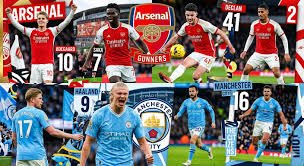
International breaks in 2024/2025 fall into four FIFA windows—September, October, November 2024 and March 2025—creating repeated pauses in the Premier League schedule. Those pauses split the league season into mini-blocks where players disperse, train and play at different intensities, then rush back with varied fatigue and injury profiles, forcing managers to re-balance fitness, travel load and selection in the first game back. For anyone treating the Premier League as a continuous, steady competition, those disruptions quietly undermine assumptions about form, fitness and “expected” starting XIs right when betting markets reopen after each break.
When 2024/2025 international breaks actually hit the Premier League calendar
The Premier League’s 2024/2025 schedule integrates four men’s international windows aligned with the FIFA match calendar. According to league and club communications, the breaks run on September 1–9, October 6–14, November 10–18 2024 and March 17–25 2025, each removing at least one Premier League weekend from the domestic calendar. For clubs like Manchester City, Arsenal or Liverpool, that means blocks where league play halts while a large portion of their squad flies out for Nations League ties or World Cup qualifiers, while others stay behind at the training ground.
These windows do not just interrupt match rhythm; they also stack additional travel and match minutes on already busy players. The season’s domestic calendar still runs from mid-August to late May without a mid-season break, so international windows become the only formal pauses—yet key players often work harder during them than they would in club training weeks. The net effect is that Premier League squads do not “rest” during FIFA dates; they fragment, load differently and then try to re-synchronise on short notice when the league restarts.
Why international travel and extra matches raise fitness and injury risks
Recent sports-science research directly links high match workload and extensive international travel to increased injury susceptibility. One 2024 study found that injured players had significantly higher match minutes, more back-to-back games within three and five days, and more international travel than non-injured controls in the 28 days before injury. Players in the injury group also travelled further, for longer, and across more time zones, and reported reduced recovery time and more fatigue, supporting the idea that combined domestic and international demands overload both physical and recovery capacity.
Surveys cited in the same work highlight how players experience this load: 35–40% believe they play too many matches per season with insufficient rest, and around 65% feel that international travel negatively affects their performance, recovery or health. Other studies focused on fixture congestion show that injury risk rises in periods with fewer than three days between matches, as muscle recovery for footballers can last up to 72 hours or longer. For clubs with many internationals, each FIFA window therefore adds exactly the kind of acute and chronic stress profile that science associates with higher injury probability in the weeks that follow.
How squads fragment during FIFA dates and why that matters when they regroup
During international breaks, Premier League squads split into roughly three groups: heavy-use internationals, lighter-use internationals, and non-internationals who remain at the club. Heavy-use players may start two high-intensity matches, accumulate travel across multiple time zones, and rejoin their clubs with jet lag and short recovery windows. Lighter-use players travel but play limited minutes, sometimes gaining tactical experience but still absorbing travel and training load. Non-internationals stay local, train under club staff and may benefit from controlled physical conditioning and tactical reinforcement.
When everyone returns, managers inherit a hybrid group whose members sit at different points on the fatigue–sharpness spectrum. Tactically important units—centre-back pairings, double pivots, pressing front lines—may not have trained together for nearly two weeks, potentially dulling automatic movements and distance control even if the XI looks familiar. This asymmetry can produce sloppy first halves, uneven pressing or mis-timed lines in the first match back, effects that raw league form before the break does not capture.
Why managers rotate more aggressively right after international windows
Sports medicine position papers emphasise that managing both acute (recent) and chronic (28-day) workloads is essential to reduce injury risk, especially for players who have just experienced heavy international duty. In practice, that pushes Premier League managers to adjust starting XIs immediately after breaks, resting those who logged many minutes and long flights while rewarding fit squad members who stayed home. Surveys report that a high proportion of coaches believe players should not exceed roughly 55 matches per season, a threshold many internationals approach or surpass when club and country minutes are combined.
Post-break league matches often feature stronger rotation than adjacent fixtures. Bettors frequently see “surprise” benchings for star forwards returning from South America or Africa, or for full-backs who played full matches twice during the window. These choices are not random: they reflect calculated trade-offs between short-term league results and longer-term availability across all competitions. From a betting perspective, line-ups in the first match after a break are inherently less predictable, and form lines built from pre-break games can be misleading if key contributors are limited or absent.
How a bettor using UFABET can treat international breaks as a structural factor
Whenever Premier League fixtures resume after a FIFA window, bettors who route their wagers through a sports betting service face a different landscape from a normal round. If one club sends 10–15 players on international duty, including its entire starting attack, while its opponent has only a handful of call-ups, the imbalance in travel and fatigue changes the underlying competitive equation before odds are even posted. When translating that into ufa168’s market choices—1X2, handicaps, totals, and player props—the analytical move is to treat the first game back as a separate micro-environment: more uncertainty about the XI, higher injury and rotation risk for key players, and more potential for disjointed performances; stakes and market selection then flow from this structural caution rather than from an assumption that pre-break form will simply resume.
Typical problems that show up in the first game after a break
International breaks introduce several recurring performance issues that bettors can watch for. Physically, heavily used internationals may show reduced sprint frequency or top speed, prompting coaches to substitute them earlier or to adjust pressing schemes to avoid exposing tired legs. Tactically, teams can look disjointed in build-up and pressing, with timing off for coordinated presses and spacing between lines slightly stretched, particularly in the opening 60 minutes.
Psychologically and rhythm-wise, some clubs lose momentum. A side that won three straight before the break can see its flow disrupted when half the XI spends two weeks in a completely different tactical environment, while struggling teams sometimes benefit from the reset. Media coverage of recent seasons notes that international breaks often “reset” domestic storylines: confident runs stall, managers use the pause to change systems, and players returning from national-team success bring different emotional states back into the dressing room. These factors collectively increase variance in first-post-break results relative to matches sandwiched between normal league weeks.
Mechanisms: travel, jet lag and asymmetric readiness
The most concrete mechanism behind post-break problems is the combination of travel and insufficient recovery time. Studies highlight that injured players tend to have more “critical zone” matches with fewer than three or five days between games, plus longer and more frequent flights across multiple time zones. Jet lag and travel fatigue degrade sleep quality, impair neuromuscular performance and increase perceived exertion, even when objective training loads are similar. In squads with global player pools, some individuals therefore re-enter Premier League matches under conditions that elevate both injury risk and performance volatility.
At team level, readiness becomes uneven: locally based squad members can be fresh and well-drilled, while long-haul internationals are tired and less tactically tuned to the week’s club training. Coaches mitigate this by limiting minutes or simplifying tactical instructions, but those adjustments inevitably change how the team plays compared with pre-break patterns. Bettors who account for these mechanisms can better judge when “strong” favourites are actually fragile in the first game back.
Where casino online behaviour can blur your read on international-break edges
International breaks also impact how people bet, not just how teams play. During gaps in Premier League action, some bettors shift volume into other competitions or into non-football betting, which can change their risk appetite and mental framing by the time the league returns. If they also engage in a casino online website during that downtime, swings from high-variance games can distort how conservative or aggressive they feel when Premier League markets reopen.
From an analytical standpoint, mixing those emotional swings with a complex environment—rotated XIs, unstable fitness, and uncertain tactical continuity—makes it harder to evaluate whether your read on post-break matches is genuinely edge-driven. Keeping a separate record of bets placed immediately after international breaks, and distinguishing them from casino activity or other competitions, helps you see whether your structural caution or aggression around these windows pays off over time.
Using structured checks and simple tables to navigate FIFA windows
Because the issues around FIFA dates are multi-factor, a structured pre-round checklist helps turn qualitative concerns into concrete decisions. Before the first matchday after each break, you can systematically compare how hard each club was hit by international duty, where their key players travelled, and how likely managers are to rotate.
A basic list could be:
- International minutes: Count or approximate how many likely starters played 150+ minutes for their national teams.
- Travel load: Note which players returned from long-haul zones (e.g. South America, Africa, Asia) and how close their last game was to the Premier League restart.
- Training continuity: Identify how many core tactical players stayed with the club and trained together for the full window.
- Historical behaviour: Recall whether the manager has previously rotated heavily or lightly after international breaks.
Running through this sequence forces you to translate “there was a break” into specific differences between the two teams’ readiness. Once you see that one side has seven starters returning from long-haul duty and the other has two, you have a clearer basis for adjusting expectations on things like pressing intensity, late-game legs and likelihood of unexpected line-up changes.
You can also encode this thinking in a simple table for quick reference:
| Post-break profile | Typical pattern | Betting implication |
| Heavy international load, long travel | Many starters played 150+ mins and flew across time zones | Higher rotation risk, more variance, caution on big favourites |
| Moderate load, mostly regional travel | Mix of starters/bench used, limited time-zone changes | Some rotation, modest impact on baseline expectations |
| Light load, few call-ups | Most key players stayed and trained with the club | More stable XI and tactics, pre-break form more predictive |
This kind of framework does not guarantee accurate predictions, but it anchors your decisions in how international breaks actually reshape squads rather than in the assumption that every Premier League round is structurally identical.
Summary
International breaks in the 2024/2025 Premier League—set across September, October, November and March windows—interrupt the domestic calendar while adding travel and match load for many key players. Sports-science evidence shows that heavy workloads, compressed recovery and long-distance travel materially increase injury risk and performance volatility, pushing managers toward post-break rotation and altering the cohesion of returning XIs. For bettors, treating the first match after each FIFA window as a separate environment—defined by asymmetric fatigue, less predictable selections and disrupted momentum—turns vague caution into a structured part of pre-match analysis instead of assuming that pre-break form and line-ups will simply resume unaffected.